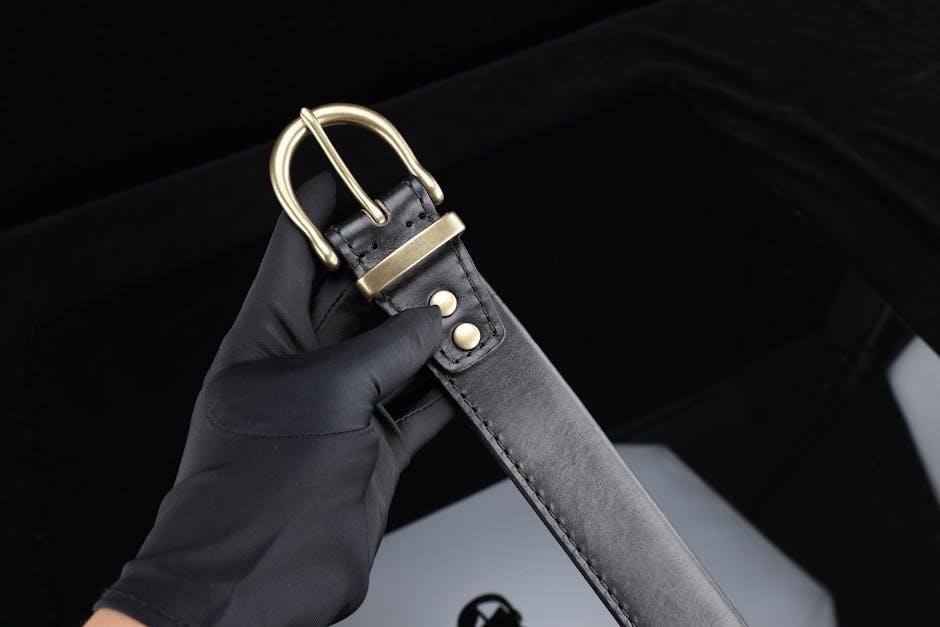
Understanding Women’s Belt Sizing
Navigating women’s belt sizes can be tricky! Accurate sizing ensures both comfort and style.
Consider waist measurements‚ pant sizes‚ and belt length for the perfect fit.
Why Accurate Belt Sizing Matters
Achieving the right belt size is crucial for both functionality and a flattering silhouette; A belt that’s too small will be uncomfortable and may restrict movement‚ while a belt that’s too large can slip and fail to define your waist effectively. Proper sizing ensures the belt sits correctly‚ enhancing your outfit rather than detracting from it.
Beyond aesthetics‚ accurate sizing impacts the longevity of your belt. Over-tightening can damage the buckle and stress the leather‚ shortening its lifespan. Conversely‚ a loose belt experiences unnecessary wear and tear. Selecting the correct size‚ based on your waist measurement or pant size‚ prevents premature damage.
Furthermore‚ a well-fitted belt provides support and can even improve posture. It’s a subtle yet significant detail that contributes to overall confidence and comfort. Taking the time to measure accurately and consult size guides‚ especially for brands like ASOS‚ Versace‚ or Ferragamo‚ is a worthwhile investment in your wardrobe and well-being.
Standard Women’s Belt Sizes Chart
Here’s a general guide to standard women’s belt sizes‚ though variations exist between brands. It’s essential to cross-reference with specific brand charts for the most accurate fit. Sizes are often correlated with both waist measurements and pant sizes.
Typical Size Breakdown:
- XS: 31 inches (Pant Size 0-2)
- S: 33 inches (Pant Size 4-6)
- M: 35 inches (Pant Size 8-10)
- L: 38 inches (Pant Size 12-14)
- XL: 41 inches (Pant Size 14-16)
- 1X: 44 inches (Pant Size 16W)
- 2X: 49 inches (Pant Size 18W-20W)
- 3X: 53 inches (Pant Size 22W+)
Remember these are approximate. Some charts also include sizes like 70cm‚ 75cm‚ 80cm‚ and so on‚ corresponding to waist measurements. Always prioritize measuring your waist for the most reliable size selection‚ as pant sizes can be inconsistent;

Converting Pant Size to Belt Size
While not always precise‚ converting your pant size can offer a starting point for determining your belt size. However‚ it’s crucial to remember that pant sizes vary significantly between brands and styles. Relying solely on pant size can lead to an ill-fitting belt.
General Guidelines: Typically‚ add 1-2 inches to your pant size to estimate your belt size. For example‚ if you wear a size 8 pant‚ a size 35-inch belt (M) might be a good starting point. However‚ consider your body shape and where you prefer to wear your belt – at the natural waist or hips;
Refer to charts that correlate pant sizes to belt lengths (XS-31‚ S-33‚ M-35‚ L-38‚ XL-41). Always prioritize measuring your waist directly with a tape measure for the most accurate result. Brand-specific size guides are also invaluable‚ as they account for their unique cuts and fits. Don’t hesitate to size up if you’re between sizes.
Measuring Your Waist for a Belt
Accurate waist measurement is paramount for selecting the correct belt size. Begin by standing naturally and relaxing your abdomen. Don’t suck in your stomach or pull the measuring tape too tightly – aim for a comfortable‚ but snug‚ fit.
Wrap a flexible tape measure around your natural waistline‚ which is generally the narrowest part of your torso‚ or where you typically wear your pants. Ensure the tape measure is level all the way around your body.
Record the measurement in inches or centimeters. If you’re between sizes‚ it’s generally recommended to round up to the next larger size. Remember to measure while wearing similar clothing to what you’d typically wear with the belt. Consider where you intend to wear the belt – at the waist or hips – as this will affect the measurement point.
Using a Tape Measure Correctly
Proper tape measure technique is crucial for an accurate belt size. Begin with a flexible‚ non-stretchable tape measure. Ensure it’s not twisted or kinked‚ as this can distort the reading. When measuring‚ maintain a parallel position to the floor throughout the process.

Avoid pulling the tape too tight; it should lie comfortably against your skin without compressing your waist. A good rule of thumb is to allow enough space to slip a finger between the tape and your body. Start and end the measurement at the same point to ensure consistency.
Read the measurement carefully‚ noting the units (inches or centimeters). If the measurement falls between markings‚ estimate to the nearest quarter inch or centimeter. Double-check your reading to minimize errors. For best results‚ have someone else assist you with the measurement‚ ensuring a more precise and reliable outcome.

Belt Length vs. Waist Size
Belt length differs from waist size! Consider where you’ll wear the belt – at the waist or hips – as this impacts the needed length for a comfortable fit.
Understanding Belt Length Measurements
Determining the correct belt length is crucial for a secure and flattering fit. Unlike waist size‚ belt length is measured from the buckle’s prong to the middle hole of the belt; This measurement represents the total length available for wear. It’s important to note that belt sizes are often indicated in inches or centimeters‚ and can vary slightly between brands.
When measuring a belt‚ lay it flat and use a ruler or measuring tape to get an accurate reading. If you’re purchasing a new belt without a size label‚ consider your pant size as a starting point‚ but always prioritize measuring your waist where you intend to wear the belt. Remember to account for the buckle’s width when calculating the overall length needed. A general rule is to add a few inches to your waist measurement to ensure sufficient overlap for fastening.
Different brands may utilize varying methods for determining belt length‚ so consulting a specific brand’s size chart is always recommended. Understanding these nuances will help you avoid the frustration of receiving a belt that is either too long or too short.
How Belt Length Relates to Pant Size

While pant size offers a helpful starting point‚ it’s not a definitive indicator of required belt length. A size 8 in one brand might fit differently than a size 8 in another‚ impacting the necessary belt size. Generally‚ there’s a correlation – larger pant sizes typically require longer belts – but individual body shapes and preferred belt placement significantly influence the ideal length.
Consider where you typically wear your pants – at the natural waist‚ hips‚ or lower. Lower rises necessitate longer belts to accommodate the increased distance around the body. A belt that’s too short won’t fasten comfortably‚ while one that’s excessively long can appear sloppy.
Charts often provide a pant size to belt size conversion (e.g.‚ sizes 4-6 correlating to a 33-inch belt)‚ but these are approximations. Always prioritize measuring your waist for the most accurate result. Remember that a belt should allow for a comfortable overlap of at least 2-4 inches after fastening‚ regardless of your pant size.
Finding Your Ideal Belt Placement
Determining your ideal belt placement is crucial for both comfort and aesthetics. Traditionally‚ belts are worn at the natural waist – the narrowest part of your torso – to accentuate the figure. However‚ modern styles often incorporate lower rises‚ shifting the belt’s position to the hips.
The placement significantly impacts the required belt length. A belt worn lower will need to be longer to reach around the body and fasten securely. When measuring for a belt‚ mimic your typical pant wearing height. Don’t measure at your natural waist if you usually wear low-rise jeans!
Consider the style of your outfit. Wider belts often look best at the natural waist‚ while narrower belts can complement both high-waisted and low-rise styles. Ensure there’s enough belt length for a comfortable overlap – typically 2-4 inches – after buckling. Prioritize a fit that feels secure and doesn’t constrict movement.

Decoding Belt Size Labels
Belt sizes are found on tags or stamped into the leather. Measurements can be in inches or centimeters;
understanding these labels is key to a perfect fit!
Locating Size Information on Belts
Finding the size on a women’s belt isn’t always straightforward‚ but several places are commonly used. The most reliable location is a fabric tag sewn onto the inside of the belt‚ often near the buckle. This tag typically displays the size in inches‚ centimeters‚ or a corresponding pant size. However‚ not all belts have tags!
If a fabric tag is absent‚ look for the size stamped directly into the leather itself. This is more common with higher-quality belts. The stamping might be subtle‚ so examine the underside of the belt carefully‚ usually near the buckle end. Sometimes‚ the size is embossed‚ requiring you to feel for the numbers rather than visually locate them.
In cases where no label or stamping exists‚ you’ll need to measure the belt yourself. This involves measuring from the point where the belt connects to the buckle to the furthest hole. Remember that this measurement doesn’t necessarily equate to your waist size‚ but it provides a starting point for comparison. Always double-check against size charts when possible.
Interpreting Belt Size in Inches
When a women’s belt size is presented in inches‚ it generally refers to the total length of the belt‚ measured from the buckle attachment point to the middle hole. This measurement isn’t your waist size‚ but a guide to finding the right fit. A belt labeled “34 inches‚” for example‚ means the total length is 34 inches.
To translate this to your waist‚ consider the extra length needed to reach around your body and secure through the buckle. Typically‚ you’ll want a belt that’s 4-6 inches larger than your natural waist measurement. So‚ if your waist is 30 inches‚ a 34- or 36-inch belt would likely be suitable.
However‚ remember that belt placement varies – at the waist‚ hips‚ or even over a dress. Higher placement requires a longer belt. Always consult the brand’s specific size chart‚ as interpretations can differ. Some brands may list the size as the waist measurement it fits‚ rather than the total belt length‚ so careful reading is crucial.
Interpreting Belt Size in Centimeters
Many women’s belts‚ particularly those from European brands‚ are sized in centimeters. This measurement‚ like inches‚ typically represents the total length of the belt from the buckle to the central hole. Understanding this distinction is key to accurate sizing.

A belt labeled “80 cm” doesn’t equate to your waist circumference. Instead‚ it indicates the overall belt length. To determine the appropriate size‚ measure your waist in centimeters and add approximately 10-15 cm to allow for overlap and secure fastening. For example‚ a 70 cm waist would likely require an 80-85 cm belt.
Always prioritize checking the specific brand’s size guide‚ as interpretations can vary. Some brands provide a direct waist-to-belt size conversion‚ while others may list sizes based on pant sizes. When in doubt‚ it’s often better to choose a slightly larger size‚ as belts can usually be adjusted to a smaller fit with additional holes.

Brand-Specific Size Variations
Belt sizing isn’t universal! ASOS‚ Versace‚ and Ferragamo each have unique guides. Always consult the specific brand’s chart for the most accurate fit.
ASOS Belt Size Guide
Finding your perfect ASOS belt size requires understanding their specific sizing approach. ASOS brand sizes are designed to fit to particular body measurements‚ but it’s crucial to remember that variations can occur between different brands. Therefore‚ relying solely on your usual size isn’t always recommended.
To determine your ideal ASOS belt size‚ it’s best to measure your waist at the point where you intend to wear the belt. Keep the tape measure comfortably snug‚ but not overly tight‚ and ensure it remains parallel to the floor. Then‚ consult the ASOS size guide‚ which correlates waist measurements with their corresponding belt sizes.
ASOS typically provides measurements in both inches and centimeters‚ offering flexibility for international customers. Remember to consider the style of the belt – a wider belt might require a slightly larger size for a comfortable fit. If you’re between sizes‚ ASOS generally advises choosing the larger size to avoid the belt feeling too restrictive.
Versace Belt Size Guide
Determining your Versace belt size is essential for achieving the desired look and fit with these luxury accessories. Versace utilizes a sizing system based on centimeters‚ so understanding this conversion is key. They offer a comprehensive conversion chart to help you translate your usual pant size or waist measurement into the correct Versace belt size.

The Versace size guide lists sizes ranging from 55cm up to 110cm‚ catering to a wide range of waist sizes. To find your ideal size‚ measure your waist at the point where you plan to wear the belt‚ keeping the tape measure snug but comfortable. Then‚ consult the Versace chart to match your measurement to the corresponding centimeter size.
If your measurement falls between sizes‚ it’s generally recommended to choose the larger size to ensure a comfortable and secure fit. Remember that Versace belts are designed to be worn at the waist‚ so accurate measurement at this point is crucial. Refer to their official website for the most up-to-date and accurate sizing information.
Ferragamo Belt Size Guide
Finding the perfect Ferragamo belt size requires understanding their specific sizing conventions. Ferragamo utilizes both standard sizes (XS‚ S‚ M‚ L‚ XL) and corresponding waist measurements in inches to ensure a precise fit. Their guide aims to help customers select the ideal size for optimal comfort and style with their renowned belts.
The Ferragamo size chart correlates sizes to waist measurements‚ starting with XS at 28 inches and extending to XL at 36 inches or more. To determine your Ferragamo belt size‚ accurately measure your waist where you intend to wear the belt. Ensure the tape measure is snug but not overly tight for a comfortable reading.
Referencing the chart‚ match your waist measurement to the corresponding Ferragamo size. If your measurement falls between sizes‚ consider opting for the larger size to guarantee a secure and comfortable fit. Always consult the official Ferragamo website or a sales associate for the most current and precise sizing recommendations‚ as variations may occur.

Troubleshooting Belt Fit Issues
Dealing with fit problems? If a belt is too long‚ consider adding holes. For belts too short‚ explore extenders or consider exchanging for a better size.
What to Do if Your Belt is Too Long
Encountering a belt that’s too long is a common issue! Fortunately‚ several solutions exist to achieve a secure and stylish fit. The most straightforward approach is to add additional holes to the belt. A leather punch tool‚ readily available at hardware or craft stores‚ makes this process relatively simple and inexpensive. Carefully mark the desired hole location‚ ensuring it aligns with your waist size and provides comfortable tension.
Alternatively‚ you might consider using a belt hole reinforcement sticker after punching a new hole. This prevents the leather from cracking or tearing over time‚ extending the belt’s lifespan. If you’re not comfortable creating new holes yourself‚ a professional cobbler or leatherworker can expertly handle the task. They possess the tools and expertise to ensure a clean and durable result.
For a temporary fix‚ you could try looping the belt around twice before fastening it. However‚ this isn’t ideal for all belt styles or outfits. Ultimately‚ addressing a too-long belt proactively ensures a polished and confident look.
What to Do if Your Belt is Too Short
Discovering your belt is too short can be frustrating! Unlike a too-long belt‚ shortening a belt isn’t typically a DIY project. Attempting to add length is generally unsuccessful and can damage the belt’s structure. The most practical solution is to exchange the belt for the correct size‚ if possible‚ especially if purchased recently.
If an exchange isn’t an option‚ consider repurposing the belt. A shorter belt can still be stylishly worn with certain outfits‚ like high-waisted skirts or dresses where a less substantial wrap is desired. Alternatively‚ explore creative DIY projects – the buckle and remaining leather can be incorporated into jewelry or other accessories.
Preventative measures are key! Always measure your waist accurately before purchasing a belt‚ and consult the brand’s specific size guide. Remember that belt sizes often differ between brands‚ so relying solely on pant size can be misleading. Prioritizing accurate measurement avoids the inconvenience of a belt that doesn’t fit.
Adjusting Belt Fit for Comfort
Achieving a comfortable belt fit is crucial for all-day wear. While a properly sized belt is the foundation‚ minor adjustments can enhance comfort. If your belt feels snug‚ avoid tightening it excessively; a slightly looser fit allows for movement and prevents discomfort during activities like sitting or bending.
Consider belt placement. Wearing a belt lower on the hips can provide a more relaxed fit‚ while a higher placement emphasizes the waist. Experiment to find what feels most comfortable and complements your outfit. If the belt buckle irritates your skin‚ try wearing a thin layer of fabric underneath or opting for a belt with a smoother buckle design.
For belts with adjustable buckles‚ utilize the full range of adjustment to fine-tune the fit. Regularly check the buckle’s security to prevent accidental loosening throughout the day. Remember‚ a comfortable belt shouldn’t restrict breathing or movement‚ allowing you to confidently go about your day.