CDL School Bus Test Questions and Answers: A Comprehensive Guide (Updated 04/09/2026)
Breaking News (04/09/2026): For the next quarter, applicants may face relaxed engine component identification requirements during the CDL testing process nationwide.
Embarking on a career transporting students requires more than just a standard Commercial Driver’s License (CDL). A dedicated School Bus (S) endorsement is crucial, signifying specialized training and knowledge. This guide, updated April 9th, 2026, provides a comprehensive overview of the CDL school bus test, covering everything from pre-trip inspections to student management.
Recent changes (as of today’s date) temporarily adjust testing, potentially easing the engine component identification portion for the next three months. However, a thorough understanding of all safety protocols and operational procedures remains paramount. Passing the school bus CDL test demonstrates a commitment to the safe and responsible transportation of our most valuable cargo: children.
Preparation is key, and this resource will navigate you through the specific knowledge and skills assessed during the examination process. We’ll explore the core areas, driving maneuvers, and frequently asked questions to ensure you’re fully prepared to succeed.
II. Understanding the School Bus Endorsement
The School Bus (S) endorsement isn’t simply an add-on to your CDL; it’s a demonstration of specialized competency. It signifies you’ve mastered the unique challenges and responsibilities associated with transporting passengers, particularly children. Obtaining this endorsement requires passing a dedicated knowledge test, focusing on school bus-specific regulations and procedures.
Currently (April 9th, 2026), while some testing components – specifically engine identification – are temporarily adjusted, the core principles of student safety and operational expertise remain central to the evaluation. This endorsement validates your understanding of loading zones, emergency procedures, and maintaining a secure environment.
Successfully acquiring the S endorsement opens doors to a rewarding career, but demands a commitment to ongoing training and adherence to the highest safety standards. It’s a vital step towards becoming a trusted guardian on the road.
III. General CDL Knowledge Test Preparation
Before tackling the school bus-specific exam, a solid foundation in general CDL knowledge is crucial. This encompasses understanding Federal Motor Carrier Safety Regulations (FMCSRs), hours of service rules, and defensive driving techniques. Thorough preparation significantly increases your chances of success.
Focus your studies on core areas like vehicle inspection, safe driving practices, and hazard perception. Remember the temporary adjustment (as of April 9th, 2026) regarding engine component identification doesn’t negate the importance of overall mechanical understanding;
Utilize your state’s CDL handbook as a primary resource, supplemented by practice tests. Mastering these fundamentals will provide a strong base for the specialized school bus endorsement knowledge test, ensuring you’re well-equipped to handle any challenge.
A. Air Brake System Knowledge
A comprehensive understanding of air brake systems is paramount for school bus drivers, given their reliance on this technology. The CDL general knowledge test heavily emphasizes air brake functionality, including components like the compressor, governor, and air tanks.
You’ll need to demonstrate knowledge of pre-trip inspection procedures specific to air brakes – checking for leaks, proper pressure build-up, and slack adjuster travel. Be prepared to explain the low-pressure warning signal and spring brake activation;
Mastering air brake concepts is not just about passing the test; it’s about ensuring the safety of students and other road users. While recent changes (April 9th, 2026) address engine specifics, air brake proficiency remains a non-negotiable skill.
B. Combination Vehicle Control
School buses, by their nature, are combination vehicles – a tractor (the bus itself) pulling a trailer of passengers. The CDL test assesses your ability to safely control this combination, demanding a firm grasp of principles differing from single-unit vehicles.
Expect questions regarding off-tracking, the tendency of the rear wheels to follow a tighter path than the front wheels during turns. Understanding how vehicle length impacts maneuverability is crucial. Practice smooth steering and braking techniques.
While current adjustments (as of April 9th, 2026) temporarily relax engine component identification, the skills needed to manage a large combination vehicle remain vital. Safe handling is paramount for student safety and successful test completion.
C. General Road Rules & Regulations
A solid foundation in general road rules is essential for passing the CDL knowledge test. Expect questions covering speed limits, right-of-way, lane usage, and proper signaling procedures. Thoroughly review your state’s Commercial Driver’s License manual for specifics.
Pay close attention to regulations concerning following distance, especially given the school bus’s size and weight. Understand the implications of adverse weather conditions and how to adjust driving accordingly. Knowledge of railroad crossing procedures is also critical.
Remember, while recent changes (April 9th, 2026) temporarily modify engine component testing, fundamental traffic laws remain unchanged and are heavily emphasized on the exam.
IV. School Bus Specific Knowledge Test – Core Areas
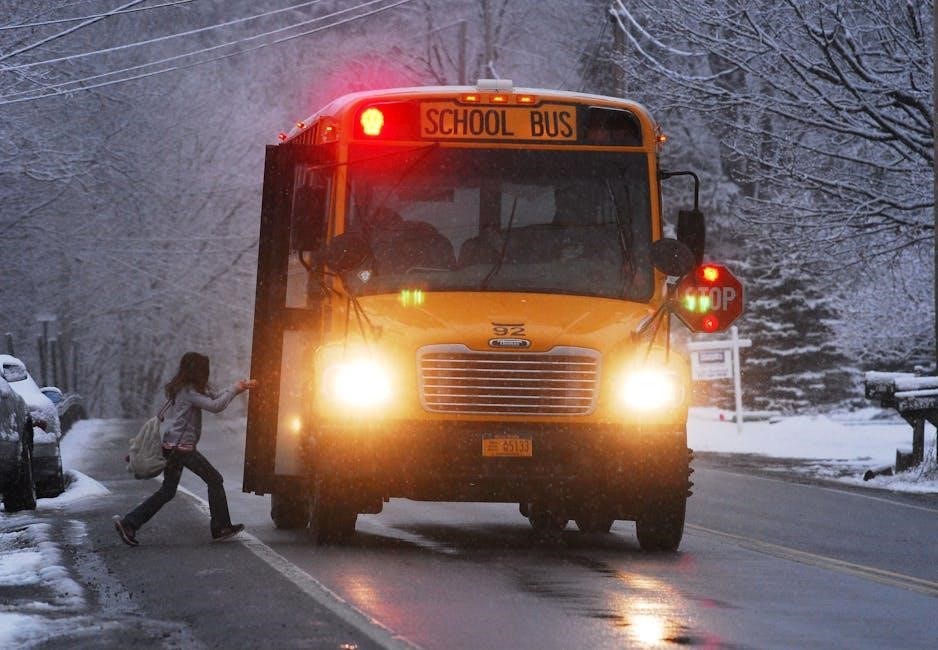
The school bus knowledge test delves into areas unique to transporting students. Expect a significant portion dedicated to student management and safety protocols, covering topics like bus conduct rules and bullying prevention. Understanding proper loading and unloading procedures is paramount, including pedestrian safety zones and crossing guard interactions.
Emergency evacuation procedures are heavily tested; you must know how to safely and efficiently evacuate students in various scenarios. Familiarize yourself with the specific requirements for conducting emergency drills.
Keep in mind the recent (April 9th, 2026) adjustments to testing – while engine specifics may be temporarily relaxed, these core safety areas remain crucial for a passing score.
A. Student Management & Safety Protocols

This section assesses your understanding of maintaining order and ensuring student safety. Expect questions on enforcing bus conduct rules, addressing disruptive behavior, and preventing bullying. You’ll need to know procedures for handling medical emergencies, including administering basic first aid and contacting emergency services.
Crucially, the test covers student loading and unloading zones, emphasizing pedestrian safety and the importance of a 360-degree visual sweep. Questions will also address proper supervision techniques to prevent accidents and ensure responsible behavior.
Remember the recent testing updates (04/09/2026); while mechanical knowledge may be adjusted, student safety remains a top priority on the exam.
B. Loading and Unloading Procedures
Mastering safe loading and unloading is paramount. Expect detailed questions about establishing a safe zone, utilizing flashing lights, and deploying the stop-arm correctly. The exam will probe your knowledge of pedestrian crossing procedures, ensuring students safely navigate to and from the bus.
You’ll be tested on maintaining situational awareness, scanning for hazards, and communicating effectively with students. Questions will cover procedures for students with disabilities, requiring specialized assistance during boarding and disembarking.
Given the recent (04/09/2026) adjustments to testing, focus on these core safety protocols. While engine component identification may be temporarily relaxed, proper loading/unloading procedures remain critical for a passing score.
C. Emergency Evacuation Procedures
Comprehensive knowledge of evacuation protocols is essential. Expect questions detailing procedures for various emergencies – fire, accident, mechanical failure – and your role in ensuring student safety. The CDL test will assess your understanding of evacuation routes, emergency exits, and accounting for all passengers.
You must demonstrate proficiency in calmly directing students, assisting those with disabilities, and establishing a safe perimeter. Questions will cover post-evacuation procedures, including first aid basics and communication with emergency services.
Remember the recent (04/09/2026) testing updates; while some areas are adjusted, emergency preparedness remains a core competency. Prioritize mastering these procedures for a successful exam outcome and, more importantly, real-world safety.
V. School Bus Inspection – Pre-Trip Inspection
The pre-trip inspection is critical, and a significant portion of the CDL school bus test. Expect a detailed, systematic inspection, verbally demonstrating your knowledge of each component. You’ll need to identify and explain the proper functioning of essential systems – brakes, lights, tires, steering, and emergency equipment.
Focus on identifying potential defects and knowing how to report them. The test assesses your ability to ensure the bus is safe for operation. Remember the recent (04/09/2026) updates; while engine component identification may be temporarily relaxed, the full pre-trip remains vital.
Practice consistently, utilizing checklists and resources; A thorough understanding of the inspection process is paramount for both the test and safe student transportation.
A. Engine Compartment Checks
Engine compartment checks are a key component of the pre-trip inspection, though currently (as of 04/09/2026) potentially less emphasized regarding detailed component identification. However, you still must demonstrate knowledge of fluid levels – oil, coolant, power steering, and windshield washer fluid – and check for leaks.
Inspect belts and hoses for cracks, fraying, or looseness. Verify proper wiring connections and the security of the battery. While naming every part might be temporarily less critical, understanding their function and recognizing obvious defects remains essential.
Be prepared to articulate what constitutes a safe operating condition and what requires immediate attention. A systematic approach and clear communication are vital during this portion of the inspection.
B. Exterior Vehicle Inspection (Lights, Tires, etc.)
A thorough exterior inspection is paramount for school bus safety. Begin with lights – headlights, taillights, brake lights, turn signals, and emergency flashers – ensuring all function correctly. Next, meticulously examine tires for proper inflation, tread depth, and any signs of damage like cuts or bulges.
Inspect wheels for lug nut tightness and damage. Check the condition of the body, looking for dents, rust, or corrosion. Don’t forget mirrors, windshield wipers, and the emergency exit mechanisms.
Pay close attention to the bus’s undercarriage, noting any fluid leaks or damaged components. A systematic approach, covering all areas, demonstrates diligence and a commitment to safety.
C. Interior Inspection (Seats, Emergency Exits)
The interior inspection focuses on passenger safety and emergency preparedness. Begin by verifying the condition of all seats – ensuring they are securely mounted and free from sharp edges or damage. Inspect seatbelts for proper functionality and wear.
Crucially, examine all emergency exits – doors and windows – to confirm they open and close smoothly and that the release mechanisms operate correctly. Check the functionality of the fire extinguisher and first-aid kit, ensuring they are readily accessible and fully charged.
Verify the presence and condition of all required signage, including emergency instructions and passenger safety information. A clean and orderly interior reflects a safe and well-maintained vehicle.
VI. School Bus Driving Skills Test – Maneuvers

The driving skills test rigorously assesses your ability to safely operate a school bus. Expect to demonstrate proficiency in several key maneuvers, including precise backing and positioning within designated spaces. Examiners will evaluate your control and awareness during these exercises.
Railroad crossing procedures are critical; you must demonstrate a complete understanding of proper stopping distances and observation techniques. Controlled stopping, executed smoothly and accurately, is also a key component, showcasing your ability to anticipate and react to changing conditions.
Constant observation of surroundings, including mirrors and blind spots, is paramount throughout the entire test. Maintaining a safe speed and adhering to all traffic laws are non-negotiable.
A. Backing and Positioning
Mastering backing and positioning is crucial for the school bus driving skills test. You’ll be required to back the bus into a designated space, often simulating a loading zone or tight turn. Examiners assess your use of mirrors, slow speed control, and overall precision.
Avoid hitting cones or markers; even minor contact results in automatic deductions. Utilize a systematic approach – pull forward to create space if needed, and back slowly, making corrections as required. Proper positioning demonstrates your ability to maneuver the large vehicle safely.
Remember to walk around the bus to visually confirm your positioning before proceeding, reinforcing safe practices.
B. Railroad Crossing Procedures
Navigating railroad crossings safely is a critical component of the school bus CDL skills test. You must demonstrate a thorough understanding of proper procedures to protect students and prevent accidents. Slow down as you approach, and activate your four-way flashers.
Before crossing, actively look and listen for approaching trains in both directions. Never proceed until you are absolutely certain the crossing is clear. Stop within 15-50 feet of the nearest rail, but not directly on the tracks.
Shift to a lower gear before crossing, and avoid shifting mid-crossing. After safely clearing the tracks, resume normal speed. Examiners will be looking for attentiveness and adherence to safety protocols.
C. Controlled Stopping & Observation
Mastering controlled stopping is paramount during the school bus driving skills test. Examiners assess your ability to bring the bus to a smooth, complete stop at designated points, demonstrating precision and control. Anticipate stops well in advance, utilizing mirrors and signals effectively.
Upon stopping, immediately and thoroughly scan your surroundings. Check mirrors for pedestrians, cyclists, and other vehicles. Observe for any potential hazards before proceeding. This demonstrates situational awareness and proactive safety measures.
Avoid abrupt braking or jerky movements. A smooth, controlled stop showcases your proficiency. Remember, passenger comfort and safety are key considerations throughout the entire test.
VII. Recent Changes to School Bus CDL Testing (As of 04/09/2026)
Significant updates to the school bus CDL testing procedures have been implemented as of today, April 9th, 2026. The U.S. Department of Transportation has announced a temporary adjustment to the practical examination requirements.
Specifically, for the next three months, applicants will not be required to verbally identify all engine components during the pre-trip inspection. This change aims to address current testing backlogs and streamline the licensing process.
However, a thorough understanding of engine functionality remains crucial for safe operation. Examiners will still assess overall vehicle knowledge and safe driving practices. Stay updated with your state’s DMV for specific details and any further modifications.
VIII. Frequently Asked Questions (FAQ)
Q: Does the recent change affect all states? A: The engine component identification waiver is a federal guideline, but individual state DMVs may have differing implementations. Check your local DMV website for specifics.
Q: Will the test still cover safety procedures? A: Absolutely. Student management, loading/unloading, and emergency evacuation procedures remain critical components of the school bus CDL test.
Q: Where can I find practice tests reflecting these changes? A: Many online resources are updating their materials. Prioritize practice tests from reputable sources aligned with the latest federal and state guidelines. Remember, understanding how systems work is still vital, even if component naming is temporarily relaxed.
IX. Resources for CDL School Bus Test Preparation
A. State DMV Handbooks: Your state’s Department of Motor Vehicles (DMV) website is the primary source for official CDL manuals. Download the school bus endorsement supplement for targeted preparation. These handbooks detail specific regulations and testing criteria;
B. Online Practice Tests & Sample Questions: Numerous websites offer practice tests. Look for those updated to reflect the April 9, 2026, changes regarding engine component identification. Focus on questions assessing safety knowledge and operational procedures.

C. CDL School Bus Training Programs: Consider enrolling in a certified CDL school bus training program. These programs provide comprehensive instruction, hands-on experience, and often include practice tests mirroring the actual exam. They can significantly boost your confidence and preparedness.
A. State DMV Handbooks
Essential Resource: Your state’s Department of Motor Vehicles (DMV) handbook is the foundational resource for CDL school bus endorsement preparation. Access these handbooks directly from your state’s DMV website – typically available as free PDF downloads.
Focus Areas: Prioritize sections specifically addressing school bus operation, passenger safety, and the required knowledge test. Pay close attention to any recent updates, particularly those reflecting the temporary changes announced on April 9, 2026, concerning engine component identification.
Comprehensive Coverage: These handbooks cover everything from pre-trip inspection checklists to emergency procedures and student management protocols. Thoroughly review all sections to ensure complete understanding of the requirements.
B. Online Practice Tests & Sample Questions
Reinforce Learning: Supplement your DMV handbook study with online practice tests and sample questions specifically designed for the school bus CDL endorsement. Numerous websites offer these resources, often in a multiple-choice format mirroring the actual exam.
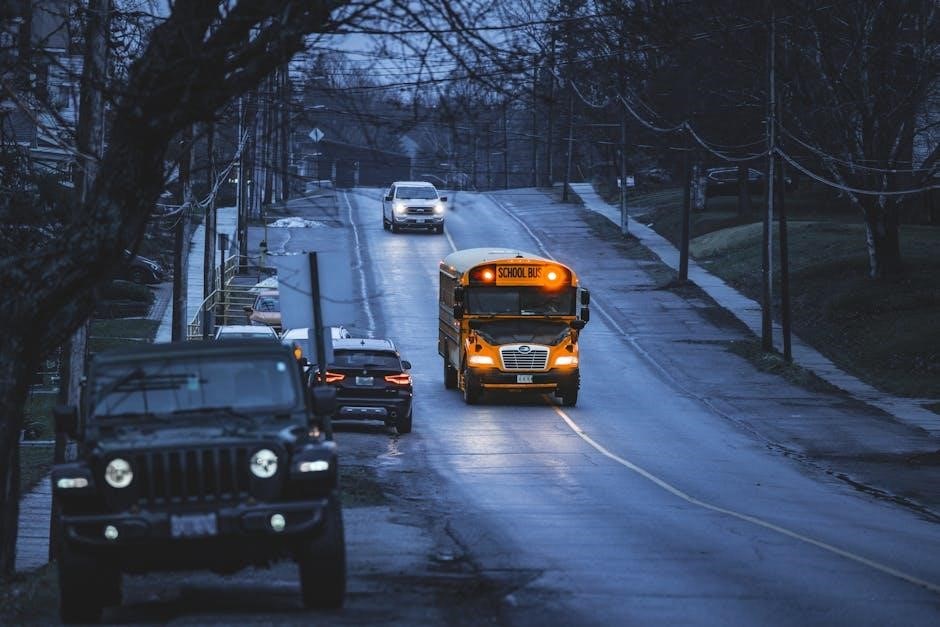
Adapt to Changes: Ensure the practice tests you utilize are updated to reflect the recent policy changes announced on April 9, 2026, regarding engine component identification. Outdated materials may present inaccurate scenarios.
Identify Weaknesses: Utilize practice tests to pinpoint areas where your knowledge is lacking. Focus your subsequent study efforts on these specific topics to maximize your test preparation effectiveness.
C. CDL School Bus Training Programs
Structured Learning Paths: Consider enrolling in a dedicated CDL school bus training program. These programs offer a comprehensive curriculum, covering all aspects of the school bus endorsement test, including pre-trip inspections, student management, and emergency procedures.
Expert Instruction: Benefit from the guidance of experienced instructors who are familiar with the specific requirements of the school bus CDL test. They can provide valuable insights and address your individual learning needs.

Updated Curriculum: Verify that the training program’s curriculum incorporates the recent changes announced on April 9, 2026, regarding the temporary relaxation of engine component identification requirements during testing.
X. Common Mistakes to Avoid During the Test
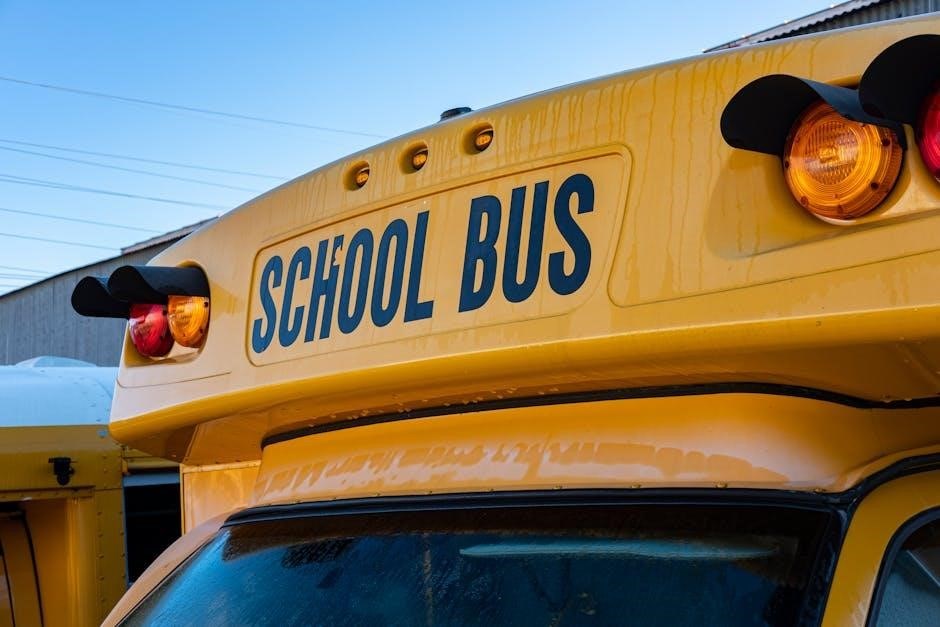
Rushing the Inspection: A frequent error is performing the pre-trip inspection too quickly. Take your time, methodically checking each component and clearly verbalizing your observations to the examiner. Remember thoroughness is key.
Ignoring Minor Defects: Don’t dismiss seemingly small issues during the inspection. Even minor defects can indicate larger problems and demonstrate a lack of attention to detail. Report everything accurately.
Failing to Verbalize: Simply looking at components isn’t enough. You must clearly articulate what you are inspecting and what you are looking for. This demonstrates understanding, not just observation.
Overlooking Recent Changes: Be aware of the temporary changes as of April 9, 2026, regarding engine component identification. Don’t spend excessive time on this area if it’s currently less emphasized.